
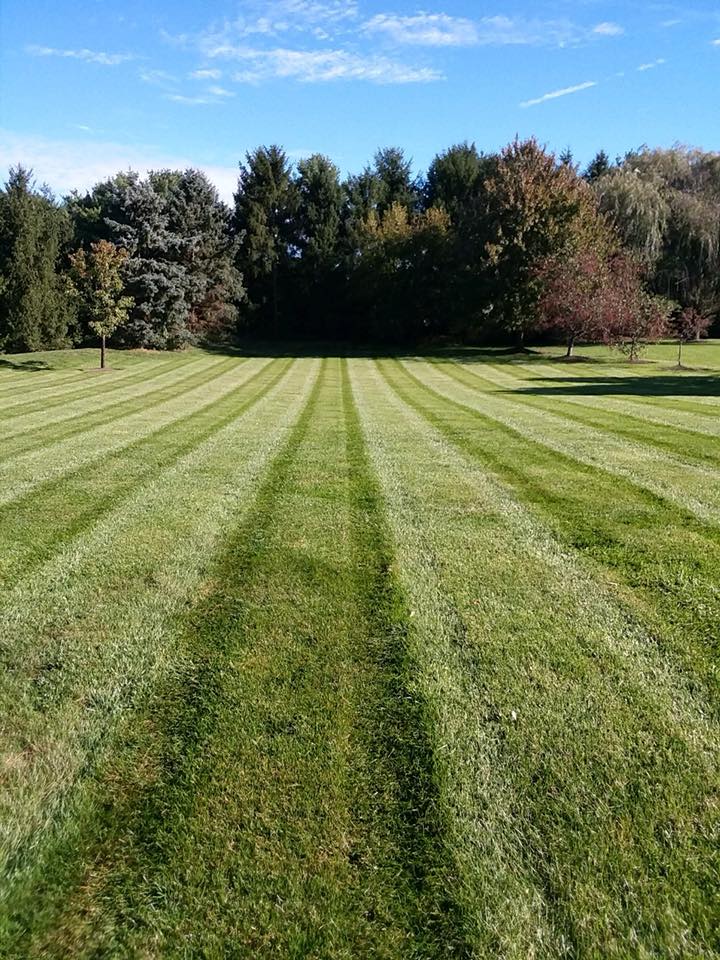
Spring Is Coming — Is Your Lawn Ready?
After a long Ohio winter, your lawn is eager to bounce back. But the steps you take in March, April, and May determine whether you’ll enjoy a lush, green yard all summer or spend the season fighting weeds and bare patches. Here in Southwest Ohio — from Franklin to Dayton to Cincinnati — our clay-heavy soils and unpredictable spring weather create unique challenges that require a local approach.
At Lawn Impressions, we’ve been helping homeowners across Montgomery, Warren, and Butler Counties get their lawns in top shape for over a decade. Here’s the complete playbook we follow every spring.
Step 1: Clean Up Winter Debris
Before anything else, walk your property and clean up what winter left behind. Pick up fallen branches, rake out leaves that collected in corners, and remove any trash or debris. This isn’t just cosmetic — matted leaves and debris smother grass, trap moisture, and create ideal conditions for snow mold and fungal diseases.
Pro tip: Don’t rake too aggressively on frozen or soggy ground. Wait until the soil has thawed and dried enough to walk on without leaving footprints. In the Franklin area, this typically means mid to late March.
Step 2: Get Your Soil Tested
Southwest Ohio soil is notoriously heavy in clay, which affects drainage, pH levels, and nutrient availability. A soil test from your local Warren County or Montgomery County Extension office costs under $20 and tells you exactly what your lawn needs.
Most lawns in our area need:
- Lime applications to raise pH (our soil tends to run acidic)
- Phosphorus or potassium depending on your specific results
- Aeration to break up compacted clay
Don’t skip this step. Throwing fertilizer at a lawn with the wrong pH is like pouring gas into a car with no engine — nothing good comes from it.
Step 3: Apply Pre-Emergent Weed Control
Timing is everything with pre-emergent herbicides. In Southwest Ohio, crabgrass seeds germinate when soil temperatures reach 55 degrees for several consecutive days. Historically, this happens in the Franklin and Dayton area between mid-March and mid-April.
A good rule of thumb: apply pre-emergent when forsythia bushes bloom. You’ll see those bright yellow flowers all over Warren County when the time is right.
Important: If you plan to overseed bare spots, pre-emergent will prevent grass seed from germinating too. You’ll need to use a crabgrass preventer that’s compatible with new seeding, or wait and seed in fall instead.
Step 4: First Mowing and Height Settings
Resist the urge to scalp your lawn on the first mow. For the cool-season grasses common in our area (Kentucky Bluegrass, Tall Fescue, and Perennial Ryegrass), set your mower to:
- First mow: 2.5 to 3 inches
- Regular season: 3 to 3.5 inches
- Summer heat: 3.5 to 4 inches
Taller grass shades the soil, retains moisture, and chokes out weeds. Our crews at Lawn Impressions never cut more than one-third of the blade height at a time — this keeps your lawn healthy and reduces stress.
Step 5: Begin Your Fertilization Schedule
Once your lawn is actively growing (typically late April in the Dayton/Franklin area), it’s time for the first feeding. We recommend a balanced fertilizer with slow-release nitrogen that feeds gradually over 6-8 weeks.
Our spring fertilization schedule for Southwest Ohio:
- Late April — First application with slow-release nitrogen
- Late May — Second application, spot-treat any broadleaf weeds that broke through
- June — Transition to summer feeding program
Avoid quick-release fertilizers that dump all their nitrogen at once. They cause a surge of growth that looks great for a week but stresses the plant and invites disease.
Step 6: Address Bare Spots and Thin Areas
Spring isn’t the ideal time for major overseeding in Ohio — fall is better for that. But you can patch small bare spots now using a quality seed-and-mulch mix. Look for seed blends labeled for your specific conditions (sun, shade, or transition zones).
For larger thin areas, plan to do a full aeration and overseeding in September. Mark the spots now so you don’t forget when fall arrives.
Step 7: Check Your Irrigation System
If you have an irrigation system, spring is the time to turn it on and check for winter damage. In the Cincinnati and Dayton areas, freeze-thaw cycles can crack pipes and damage sprinkler heads.
Run each zone and look for:
- Broken or tilted heads
- Low-pressure zones that may indicate a leak
- Blocked nozzles
- Coverage gaps
Even without an irrigation system, keep an eye on rainfall totals. Your lawn needs about 1 inch of water per week during the growing season. Southwest Ohio’s spring rains usually provide this, but dry stretches in May and June may require supplemental watering.
When to Call a Professional
If your lawn has significant bare areas, persistent weed problems, drainage issues, or you simply want it to look its best without the weekend hassle, it may be time to call in professional help.
At Lawn Impressions, we offer comprehensive lawn care and fertilization services tailored to Southwest Ohio conditions. Our team handles everything from weekly mowing to custom fertilization programs, and our mosquito and pest control keeps your outdoor spaces comfortable all season.
Ready to get your lawn in shape this spring? Call Lawn Impressions at (937) 748-9431 or request a free estimate. We serve Franklin, Dayton, Cincinnati, and communities across Montgomery, Warren, and Butler Counties.